
Stadium Lighting Installation with Crane in Rose Hill, KS
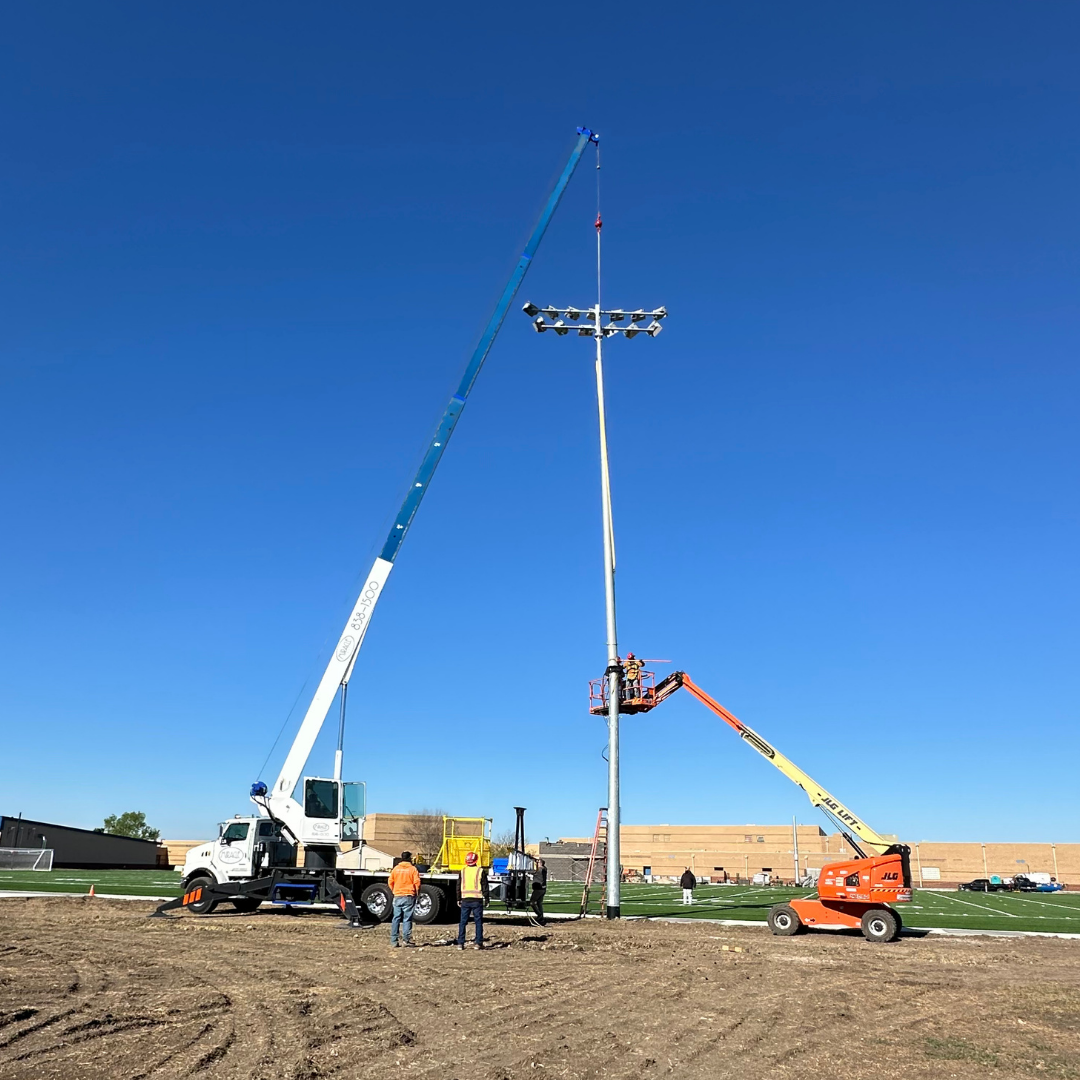
Last year in Rose Hill, KS, we worked on a stadium lighting installation for a brand new baseball field and football stadium at Rose Hill High School. These types of projects require specialized equipment and careful planning, especially when working at height.
Having access to the right crane rental in Wichita helps keep lifts efficient and on schedule—particularly when multiple crews and tight timelines are involved.
This project involved lifting and placing large lighting fixtures at significant heights while coordinating with other teams on an active job site. It’s not just about lifting materials—it requires proper crane equipment and capabilities, clear communication, and a well-planned approach to keep everything moving efficiently.
Project Snapshot
Location: Rose Hill, KS
Project Type: Stadium lighting installation
Scope: Lifting and setting multiple stadium light fixtures
Equipment Used: 30-ton crane
Stadium Lighting Installation Project Overview
This project involved setting multiple stadium light fixtures for newly constructed baseball and football fields at Rose Hill High School.
Each light assembly needed to be lifted from ground level and precisely positioned at the top of tall poles. With multiple lifts required across different areas of the site, consistency and coordination were key.
For this specific project, a 30-ton crane provided the reach and capacity needed to safely complete the lifts while maintaining efficiency across the site.
Projects like this are common for:
Schools and athletic facilities
New construction developments
Field and stadium upgrades
Because of the height and repetition involved, these jobs require the right crane setup and a clear lifting sequence. Choosing the correct equipment—especially when comparing options like a 30-ton vs 40-ton crane—plays a major role in keeping the project on track.
Key Challenges and Considerations
Lift Height and Reach
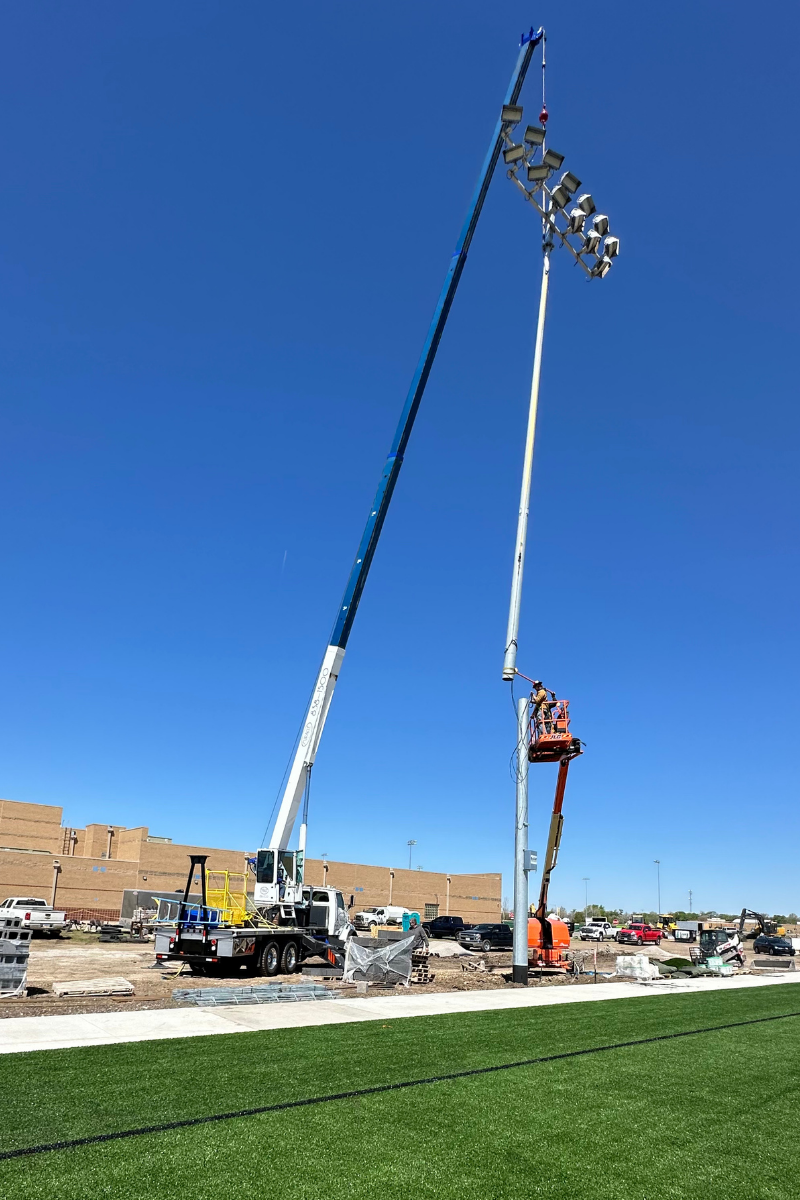
Stadium lighting installations require lifting materials to significant heights. The crane must be able to safely handle both the weight of the fixtures and the required reach without compromising stability.
This is where understanding crane lift capacity becomes critical, since capacity decreases as distance and height increase.
Multiple Lifts Across the Site
Unlike a single placement job, this project required repeated lifts across different areas of the stadium.
That means:
Repositioning the crane as needed
Maintaining consistency across lifts
Keeping workflow efficient for the install crew
Site Access and Setup
Even on a new construction site, access and positioning still matter.
Key considerations included:
Clear paths for crane entry and setup
Proper outrigger placement
Avoiding interference with other trades working nearby
Coordination with Other Crews
This project involved working alongside other contractors on an active job site.
Timing and communication were important to:
Avoid delays
Keep crews moving efficiently
Ensure safe working conditions
How the Lift Was Handled
The project was approached with a focus on planning, positioning, and sequencing.
The general process included:
Positioning the crane for optimal reach across multiple lift points
Coordinating with the install crew before each lift
Lifting and setting each lighting fixture in a controlled sequence
Repositioning as needed to maintain efficiency across the site
Lights were rigged securely and lifted by crane, then guided into position using a coordinated approach. A crew member in a boom lift helped guide and align the sections from below while the crane operator controlled positioning from above. The pole sections slide together, requiring precise control to ensure proper alignment and fit.
Even on more open job sites, this level of coordination often reflects strategies used in tight access crane lifts, where precision and controlled movement are critical.
This type of lift also relies on having the right setup and specifications, which is why understanding your available crane equipment and capabilities ahead of time plays such an important role in execution.
Because multiple lifts were required, keeping a consistent rhythm helped reduce downtime and kept the project moving forward.
Why Planning Matters for Projects Like This
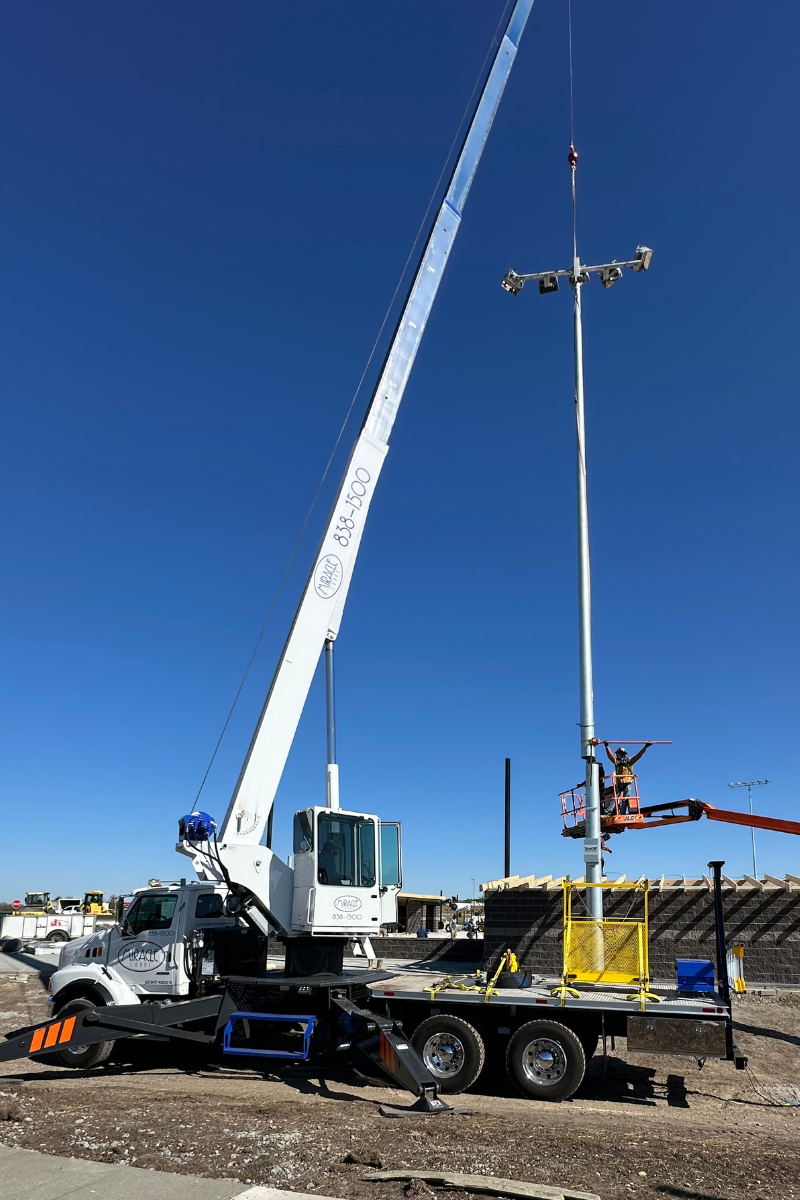
Stadium lighting projects highlight how important planning is for any crane lift—especially when height and repetition are involved.
Without proper planning, issues can come up quickly:
Incorrect crane sizing can limit reach or capacity
Poor positioning can slow down the job
Lack of coordination can create delays across crews
For contractors and project managers, having a clear plan before lift day helps:
Keep timelines on track
Reduce job site disruptions
Maintain safe working conditions
Conclusion
This Rose Hill High School project is a good example of how crane work fits into larger construction efforts. While the lifts themselves are straightforward, the success of the job comes down to preparation, coordination, and using the right equipment for the conditions.
If you’re planning a similar project, it helps to think through these factors early.
Learn more about crane rental in Wichita and how to plan a crane lift for your next project.
FAQ SECTION
-
Crane size depends on the height, reach, and weight of the materials. For this project, a 30-ton crane was used to safely handle the lifts.
-
Lights are rigged securely and lifted by crane, then guided into position using coordination between the crane operator and a crew member in a boom lift to ensure proper alignment as the pole sections are set.
-
A clear lift sequence and efficient crane positioning help reduce downtime and keep the project moving.
-
Planning crane placement ahead of time and adjusting setup strategy is key, especially on active or restricted sites.
-
It depends on the number of fixtures and site conditions, but most projects are completed over one or several scheduled lift days.
-
Weight of materials, lift height, radius, and site access all play a role in choosing the right crane.