
Preparing for a Rooftop HVAC Unit Lift in Wichita, KS
What to Know Before Your Lift Day
Rooftop HVAC unit lifts are one of the most commonly requested crane services in Wichita and South-Central Kansas. In fact, they’re one of the most common types of commercial crane lifts we perform, especially on active job sites. Whether you're replacing an existing unit or installing a new system, proper planning helps keep the lift safe, efficient, and on schedule.
At Miracle Crane, we work with HVAC contractors and construction teams to help ensure every rooftop lift is handled with precision. Here’s what to consider before lift day.
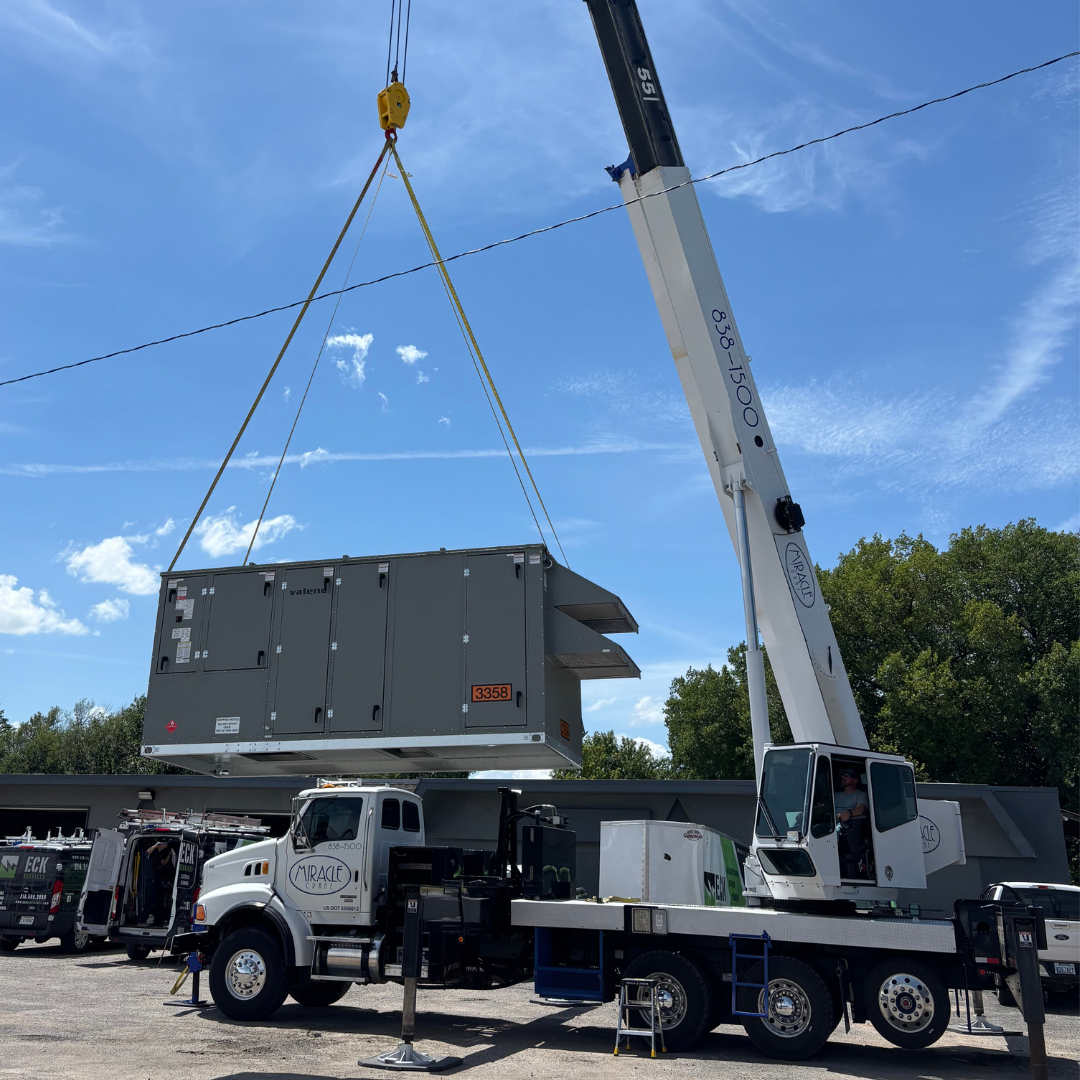
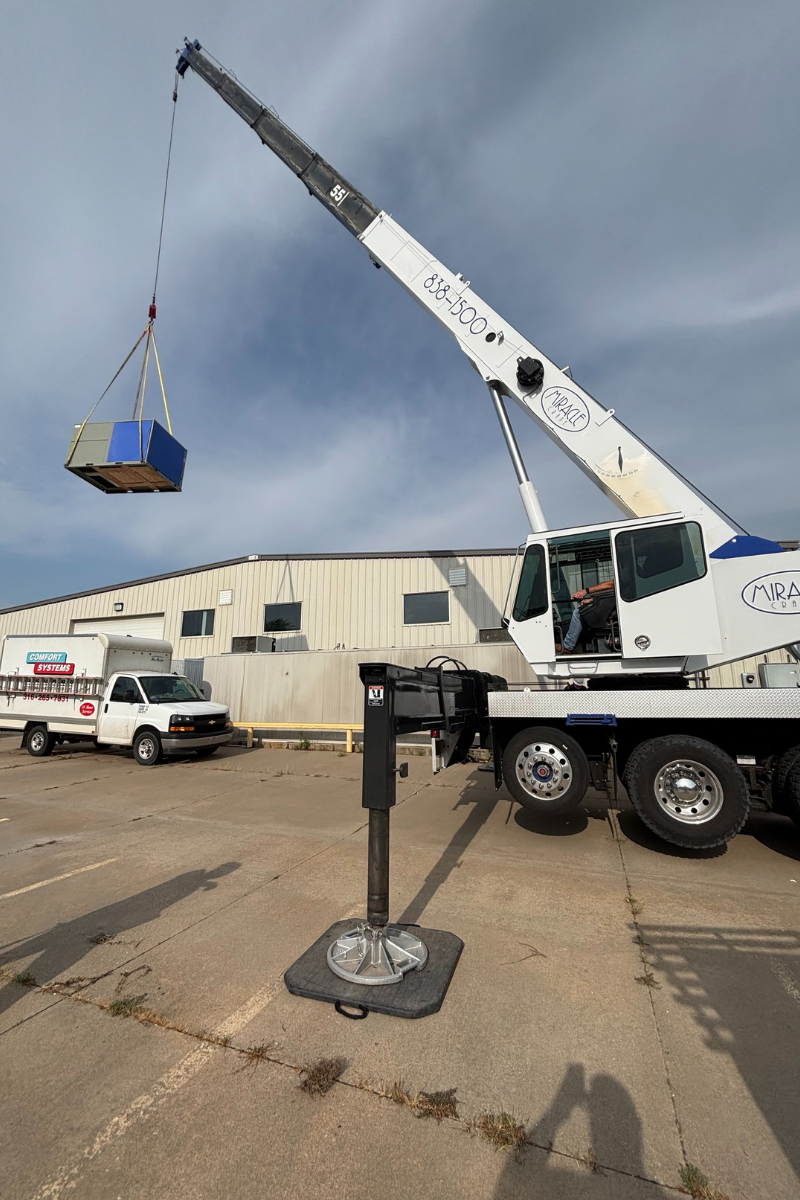
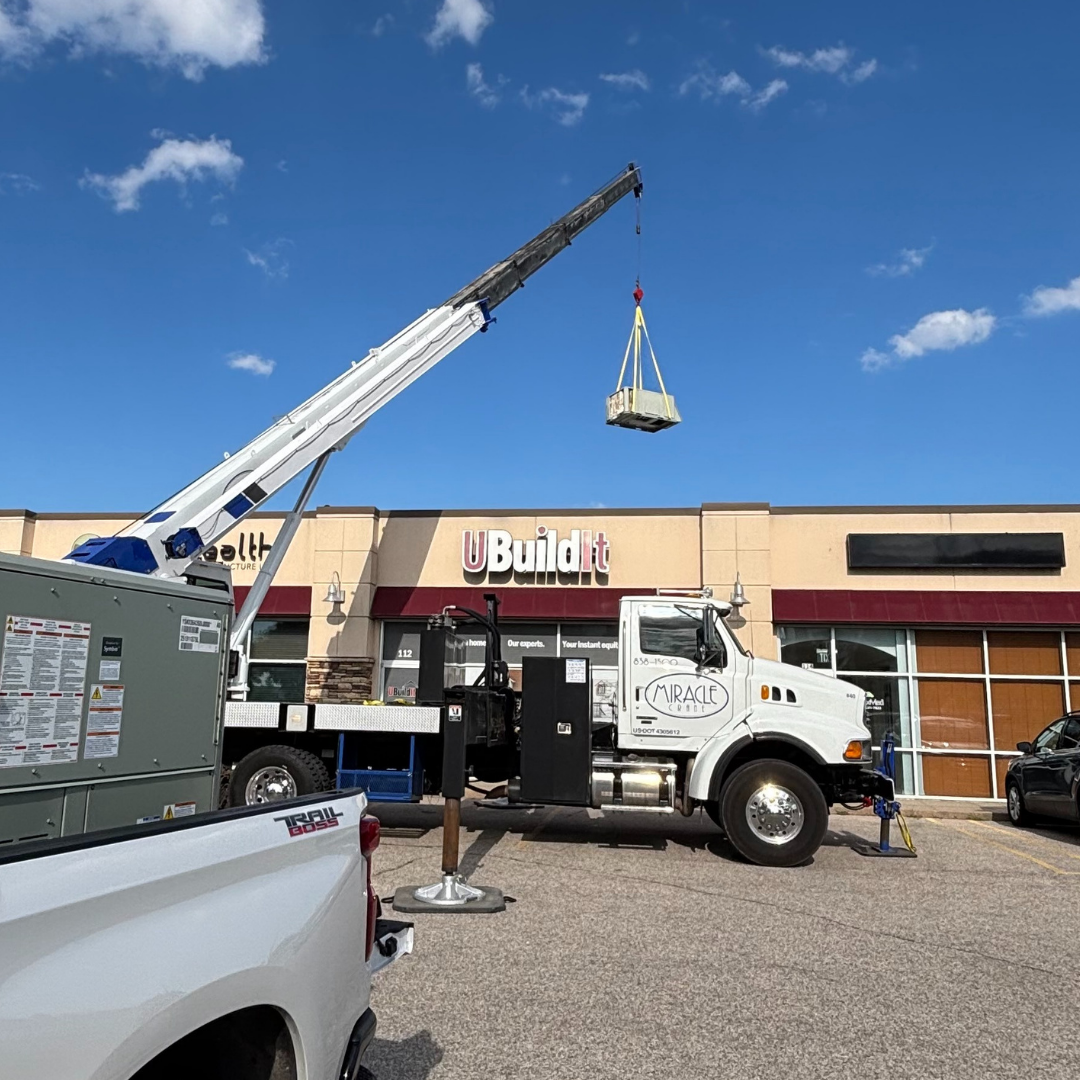
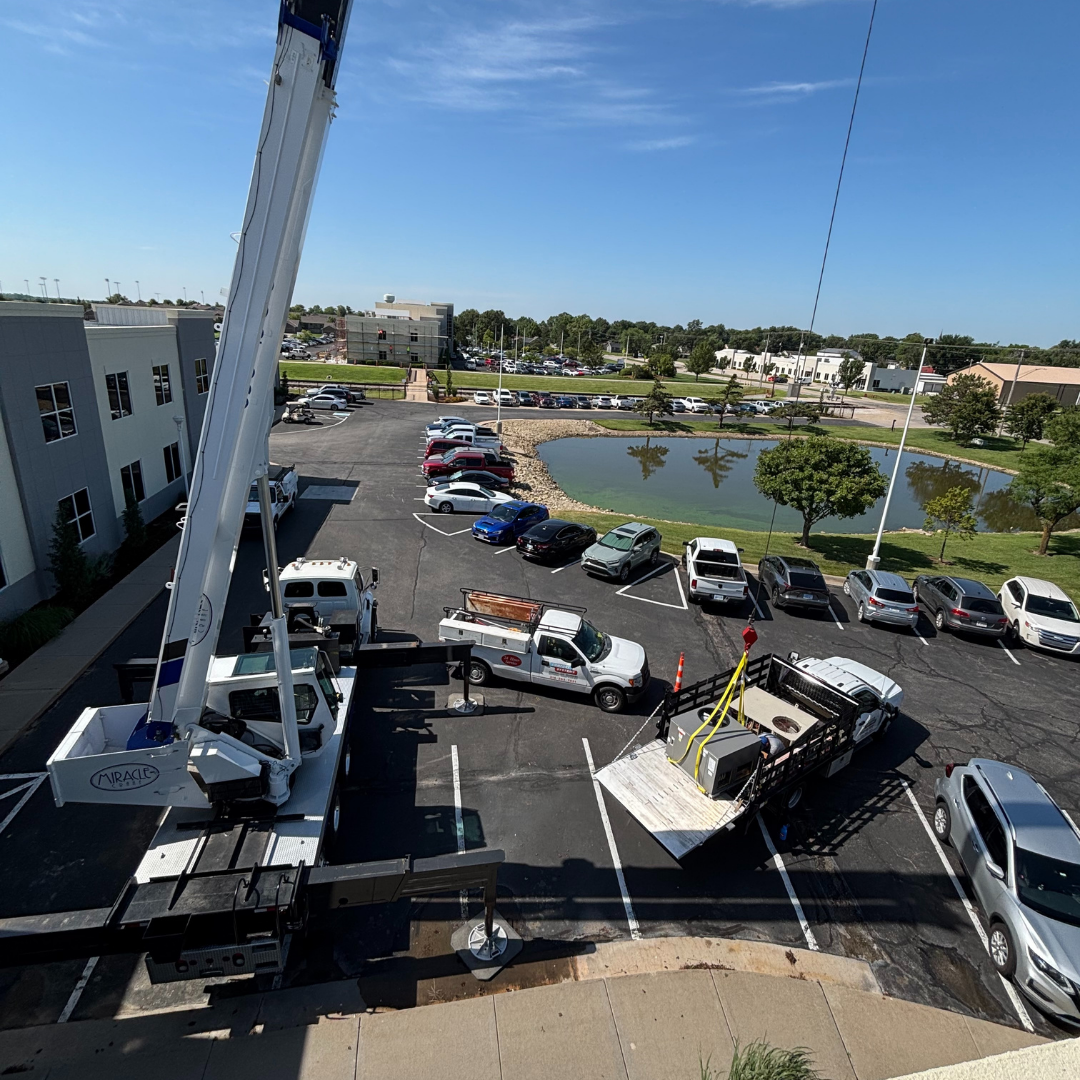
Miracle Crane lifting a 4,000 lb commercial RTU
Know the Weight of the Unit
Start with the exact weight of the HVAC unit, including rigging. This determines the crane size, lift radius, and overall setup.
A 30-ton crane is typically used for lighter units and shorter reaches, while a 40-ton crane may be needed for heavier equipment or lifts requiring additional distance.
Learn more about choosing the right equipment in our 30-ton vs 40-ton crane comparison guide.
Evaluate Site Access and Setup Space
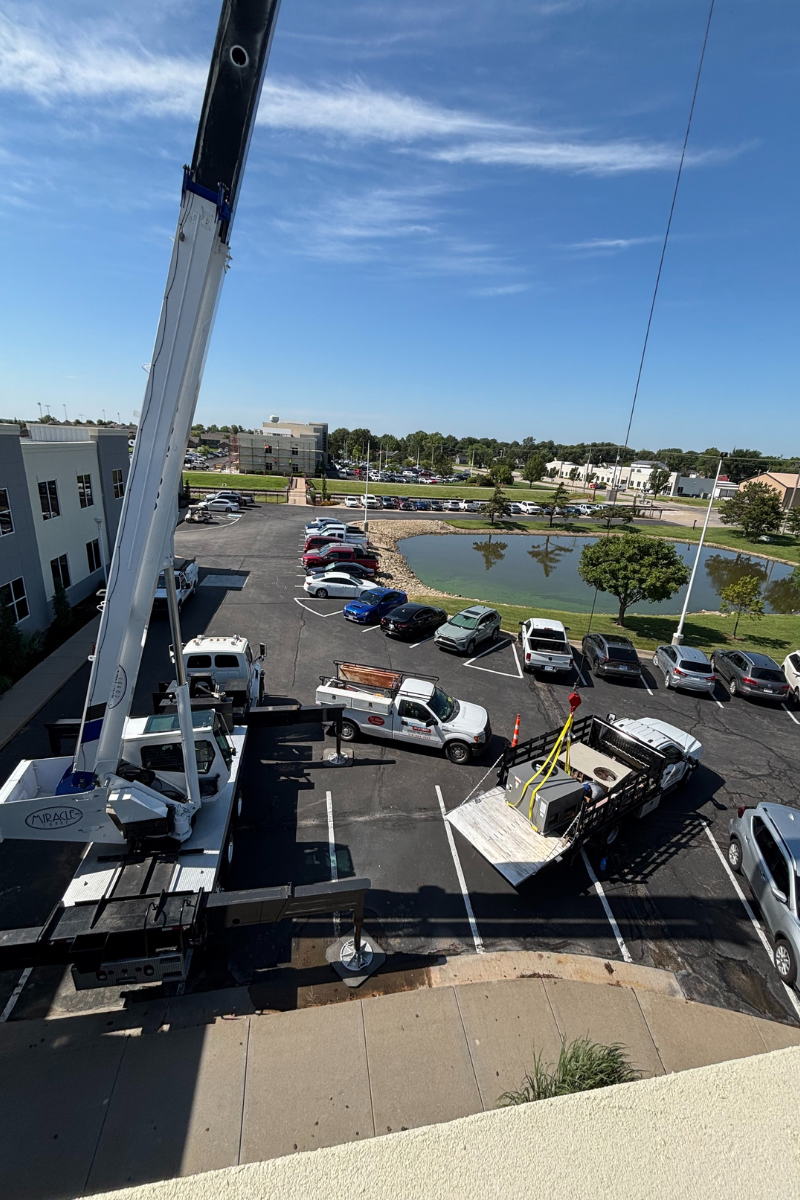
The job site must allow proper crane positioning. Limited access or obstacles can affect how the lift is performed.
Key factors include:
Clear path for the crane to enter and set up
Stable ground for outriggers
Distance from the building
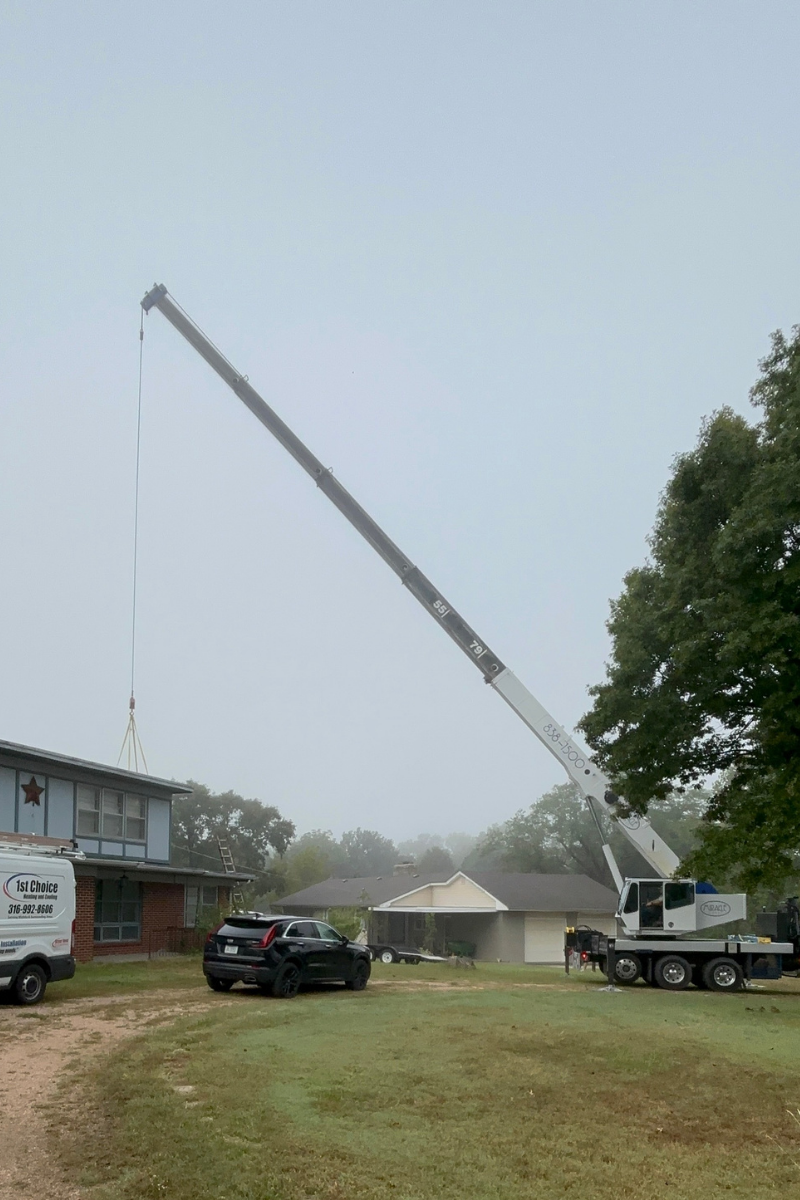
Obstacles like power lines, trees, or nearby structures
Planning for these ahead of time prevents delays on lift day.
Site conditions also play a role in how much a crane can safely lift at different distances. You can learn more in our crane lift capacity guide.
Make Sure the Roof Is Ready
Before the crane arrives, the roof should be fully prepared.
This means:
The curb or mounting location is installed
The crew is ready to receive the unit
Communication is established between ground and rooftop teams
Having everything in place keeps the lift moving efficiently once it begins.
Plan Around Weather Conditions
Weather plays a major role in crane operations, especially wind.
Even moderate wind can impact control during a rooftop lift. In some cases, scheduling may need to be adjusted to maintain safe working conditions.
Coordinate Timing with Your Team
Rooftop HVAC lifts often involve multiple crews. Proper coordination between contractors, operators, and site managers helps reduce downtime and keeps the project on track.
Common Mistakes That Can Delay a Lift
Even small oversights can slow down a project or create unnecessary complications.
Some of the most common issues include:
Incorrect or estimated unit weight
Limited or blocked access for crane setup
Roof not fully prepared before arrival
Poor communication between crews
Not accounting for weather conditions
Addressing these ahead of time helps avoid delays and keeps the lift running smoothly.
Working with an experienced crane team helps avoid these issues and helps ensure your lift is handled safely from start to finish. See how we handle projects on our crane services page.
Work with an Experienced Crane Operator
Rooftop lifts require precision and clear communication. Working with a certified operator helps ensure the lift is planned correctly and performed safely.
At Miracle Crane, every lift is handled by an NCCCO-certified operator with a strong focus on safety and efficiency.
Schedule Your Rooftop HVAC Lift
If you're planning a rooftop HVAC installation in Wichita or the surrounding areas, we’re ready to help.
Call 316-838-1500 or request a quote to schedule your lift.
Frequently Asked Questions About Rooftop HVAC Lifts
Here are some common questions we get about rooftop HVAC crane lifts in Wichita:
-
Costs can vary depending on crane size, lift duration, and site conditions. Most lifts have a minimum time requirement, and factors like access, distance, and setup complexity can affect pricing. The best way to get accurate pricing is to request a quote based on your specific project.
-
The crane size depends on the unit’s weight and the distance from the crane to the building. Many rooftop HVAC lifts use a 30-ton or 40-ton crane. You can read more about the differences in our 30-ton vs 40-ton crane guide.
-
Most rooftop HVAC lifts are completed quickly once setup is complete, often within a few hours. However, setup time, site access, and coordination between crews can impact the total time needed.
-
Yes. The site should be accessible, the roof should be ready with the mounting location installed, and all crews should be coordinated ahead of time. Proper preparation helps avoid delays and keeps the lift efficient.
-
Wind is one of the biggest safety factors during a lift. If conditions are not safe, the lift may need to be delayed. Safety always comes first when determining whether a lift can proceed.
Need help planning your rooftop HVAC lift? Visit our crane services page to learn more or get in touch with our team.